
Is Your Lawn Getting Enough Water? Signs of Drought Stress in Georgia Grass
If you've lived in Georgia for any length of time, you know summer has a personality of its own. One week it's raining every afternoon, and the next your lawn is baking under a relentless sun. The tricky part? Your grass doesn't always wave a white flag the moment it gets thirsty.
In fact, so many homeowners mistake drought stress for lawn disease or assume their grass simply needs more fertilizer. Before you turn on the sprinklers or head to the garden center, it's worth learning what your lawn is actually trying to tell you.
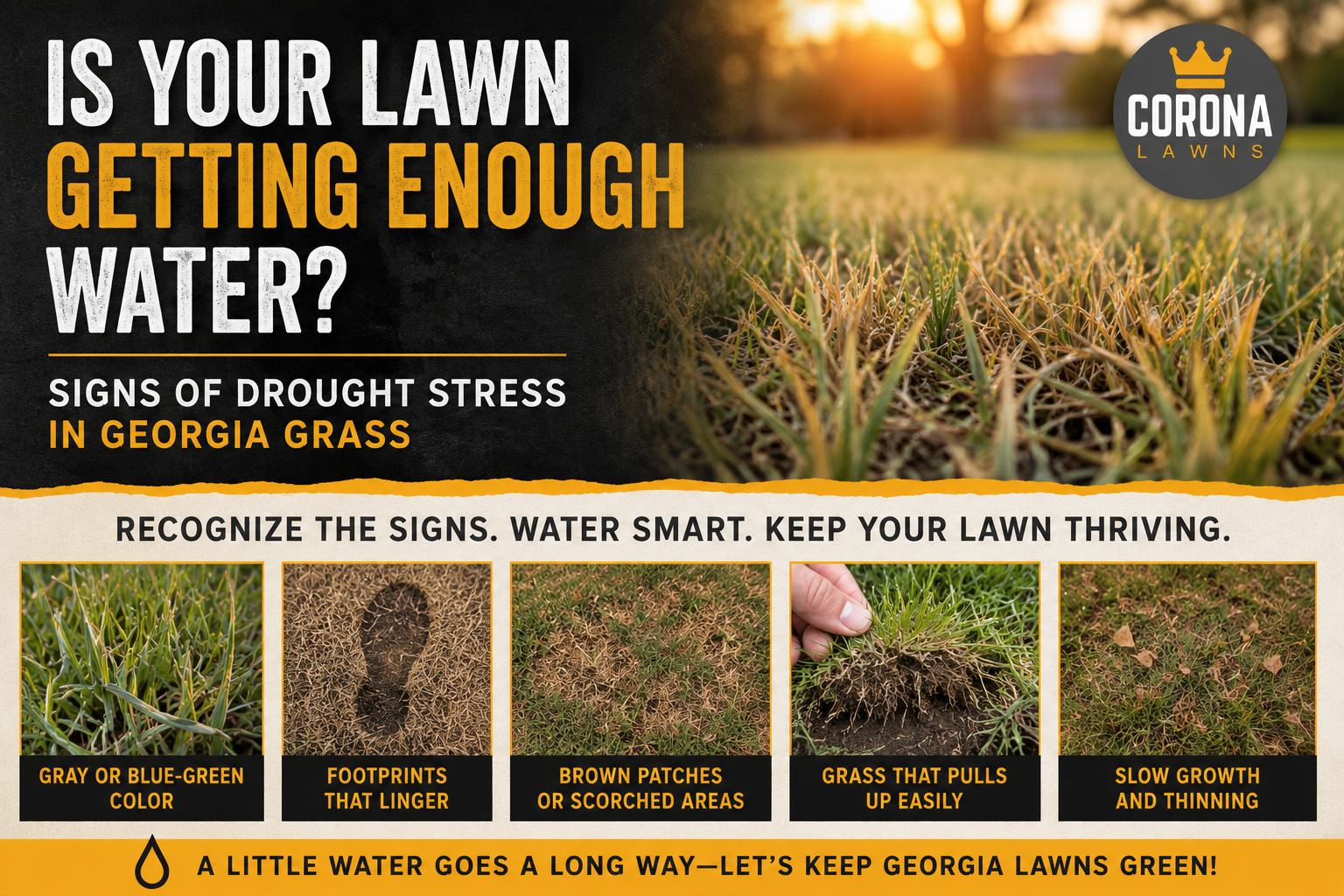
1. Your Grass Changes Color
Healthy grass has a vibrant green color. When it's struggling to get enough water, it often takes on a dull gray-green or bluish tint. It's one of the earliest signs that your lawn is under stress.
Think of it as your lawn saying, "Hey... I'm getting a little thirsty over here."
2. Your Footprints Stick Around
Here's an easy test.
Walk across your lawn and look behind you. If your footprints remain visible instead of springing back within a few minutes, the grass blades have lost moisture and elasticity. That's a classic and simple sign your lawn needs water.
3. Brown Patches Start Appearing
Not every brown patch is a lawn disease.
During Georgia's hottest weeks, drought stress often causes irregular brown or tan areas to appear, especially in sections that receive full afternoon sun or have compacted soil.
If those spots don't improve after a deep watering, it may be time to investigate further.
4. Grass Stops Growing
When water becomes scarce, your lawn shifts into survival mode.
Instead of putting energy into growing taller, it slows down to conserve moisture. If you suddenly find yourself mowing much less often during the peak growing season, drought stress could definitely be the reason.
5. The Soil Feels Hard and Dry
Healthy soil should absorb water easily.
If water puddles on the surface or runs off into the driveway instead of soaking in, compacted soil may be preventing moisture from reaching the roots. This is especially common during long stretches of hot, dry weather.
How Much Water Does a Georgia Lawn Need?
As a general rule, most established Georgia lawns need about 1 inch of water per week, whether that comes from rainfall or irrigation.
The best time to water is early in the morning. This allows moisture to soak into the soil before the day's heat causes excessive evaporation and gives the grass time to dry before evening.
A Few Simple Ways to Help Your Lawn Beat the Heat
We’ve educated people on this for years, and we will continue to do so: keeping your lawn healthy during a Georgia summer doesn't require watering every day. In fact, it is deep, infrequent watering that encourages stronger roots.
You can also help your lawn by:
Watering early in the morning.
Keeping mower blades sharp.
Avoiding cutting more than one-third of the grass height at a time.
Leaving grass clippings when appropriate to help retain moisture.
Watching for early signs of drought before permanent damage occurs.
Don't Wait Until Your Lawn Waves the White Flag
A little drought stress is absolutely normal during a Georgia summer, but prolonged stress can truly weaken your lawn and make it more vulnerable to weeds, insects, and disease.
If your grass has lost its color, isn't bouncing back, or doesn't look like itself, Corona Lawns can help identify the problem and recommend the best solution. Sometimes your lawn just needs a drink. Other times, it's asking for a little more attention.
Either way, catching it early is the key to keeping your lawn healthy all season long.
