
Common Lawn Diseases During Georgia Summers (and How to Prevent Them)
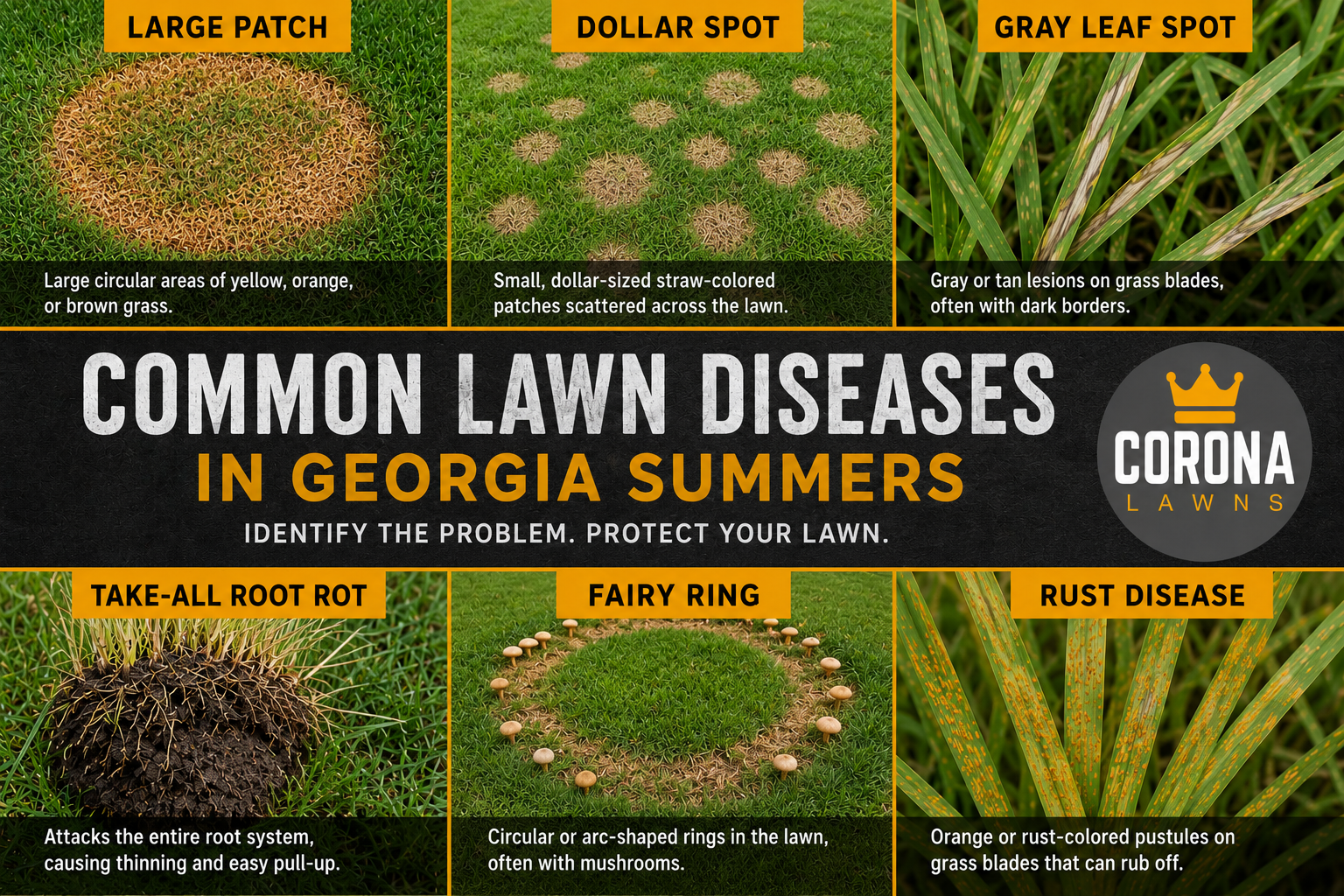
Georgia summers bring plenty of sunshine, but they also create the perfect environment for lawn diseases. High temperatures, heavy humidity, afternoon thunderstorms, and frequent watering all contribute to fungal infections that spread across your yard.
There are many homeowners who turn to ask the online world; saying they notice “small brown patches”, “strange-colored grass”, “white or gray webbing”, or “circular dead spots” and they wonder whether their lawn is dying. The good news is that most summer lawn diseases are treatable, especially when they're identified early.
Below are the most common lawn diseases found throughout Coastal Georgia during the summer months, what they look like, why they occur, and how you can help prevent them.
Large Patch
Large Patch gets its name from the large circular areas of discolored grass it creates in warm-season lawns. It is one of the most common lawn diseases found in Bermuda, Zoysia, St. Augustine, and Centipede grass throughout Georgia, often appearing when temperatures begin to cool in late summer and fall.
Signs of Large Patch:
• Large circular patches of yellow, orange, or brown grass
• Rings of discolored turf that continue to expand
• Grass blades easily pull away from the roots
• Thinning turf within affected areas
• Patches may grow several feet wide
Large Patch develops when the soil stays warm and moist for extended periods. Overwatering, poor drainage, and excess thatch can all create ideal conditions for the disease to spread.
Prevention Tips:
Water early in the morning to allow the lawn to dry throughout the day.
Avoid excessive watering and improve drainage in areas that stay wet.
Reduce thatch buildup through proper lawn maintenance.
Mow at the recommended height for your grass type.
Follow a balanced fertilization program to promote healthy, resilient turf.
Treat symptoms early to help prevent the disease from spreading.
Dollar Spot
Dollar Spot gets its name simply because the dead patches often start about the size of a silver dollar. It affects Bermuda, Zoysia, and other warm-season grasses during periods of high humidity and low fertility.
Signs of Dollar Spot:
Small tan or straw-colored circles
White cobweb-like fungus visible in the early morning dew
Multiple spots eventually merge into larger damaged areas
Dollar Spot commonly appears when lawns are under stress from drought or low nitrogen levels.
Prevention Tips:
Maintain proper fertility.
Water deeply but infrequently.
Reduce prolonged leaf moisture by watering at sunrise.
Avoid mowing when grass is wet.
Gray Leaf Spot
We’re noticing a trend with the names of these lawn diseases. Very simple names based off descriptions. Gray Leaf Spot gets its name from the gray or tan lesions that develop on the individual grass blades. It commonly affects St. Augustine grass during Georgia's hot, humid summers, especially after a lot of rainfall, or heavy irrigation.
Signs of Gray Leaf Spot:
Small gray or brown lesions on grass blades
Yellow halos surrounding spots
Grass begins thinning rapidly
Entire sections may appear scorched
Warm temperatures combined with high humidity make Gray Leaf Spot especially aggressive during summer.
Prevention Tips:
Again. Avoid overwatering.
Do not apply excessive nitrogen fertilizer.
Increase air circulation around shaded areas.
Mow at the proper height for your grass variety.
Take-All Root Rot
Another disease description written into the name. Take-All Root Rot attacks the entire root system instead of just the grass blades. It is most commonly found in St. Augustine grass, centipede grass, and Bermuda lawns, especially in poorly drained soils during warm and wet weather.
Signs of Take-All Root Rot:
Yellowing grass that resembles drought stress
Grass pulls up easily from the soil
Thin, weak turf despite watering
Black or rotting roots
Because the roots are damaged, adding more water often makes the problem worse.
Prevention Tips:
Maintain healthy soil pH.
Improve drainage.
Avoid excessive watering.
Keep the lawn healthy through proper fertilization and mowing.
Fairy Ring
Fairy Ring is one of the more unusual lawn diseases and it’s known to surprise homeowners. Fairy Ring gets its name from the distinctive circular rings it forms in the lawn, often accompanied by mushrooms. It develops when naturally occurring fungi feed on buried organic matter beneath the soil and is most common during warm and moist conditions.
Signs of Fairy Ring:
Dark green circles or rings
Mushrooms growing in a circular pattern
Brown or dead grass surrounding the ring
Water may bead on the soil surface
Fairy Ring develops when fungi feed on buried organic material beneath the lawn.
Prevention Tips:
Aerate compacted soil.
Improve water penetration.
Remove buried wood or organic debris when possible.
Maintain consistent irrigation.
Rust Disease
Rust Disease gets its name from the orange or ‘rust-colored’ spores that coat the grass blades and rub off onto shoes, pets, lawn equipment, etc. It appears during periods of high humidity when lawns are stressed by drought, nutrient deficiencies, or excessive shade.
Signs of Rust:
Orange, yellow, or reddish powder on grass blades
Shoes and mower wheels become coated with orange dust
Grass appears dull or faded
Slower overall lawn growth
Rust rarely kills healthy grass but weakens it significantly if left untreated.
Prevention Tips:
Fertilize appropriately.
Mow regularly.
Water deeply during dry periods.
Improve overall turf health to encourage recovery.
RECAP: How to Prevent Summer Lawn Diseases in Georgia
Every disease has its own characteristics, however most do thrive under similar conditions. Keeping your lawn healthy throughout the summer can truly reduce the risk of fungal problems.
Some of the best preventive practices include:
Water early in the morning
Avoid watering every day
Mow with sharp blades at the proper mowing height (ask us)
Improve drainage where you see that water collects
Avoid excessive fertilizer during the extreme heat
Aerate compacted soil
Address lawn problems as soon as they appear. Don’t let it spread.
Don't Wait Until Small Problems Become Big Ones
So many lawn diseases start as a small patch that homeowners will barely notice. Within just a week or two, those patches can spread across huge portions of the yard, making treatment more difficult and more expensive.
If you've noticed brown spots, yellowing grass, unusual rings, powdery residue, thinning areas in your lawn, or anything that just doesn’t feel right, it's best to have the problem identified early. Proper diagnosis is the first step toward restoring a healthy, green lawn.
At Corona Lawns, we help homeowners throughout Coastal Georgia identify lawn problems quickly and recommend the right solution before minor issues become major costly repairs.
Healthy lawns take time & care. With proper early intervention, your lawn will stay beautiful all summer long.
